
Did you know that your jawbone starts to thin after adult teeth go missing? Under normal circumstances, the roots stimulate new bone growth with each bite down, which keeps the foundation of your mouth active and healthy. When they fall out, you can lose up to 20% of the surrounding bone density within the first year.
That means your dentures, which were designed to fit like a glove, can eventually become ill-fitting. Those seeking a more permanent solution might consider getting dental implants instead. Continue reading to learn more about what to expect when transitioning to this longer lasting solution!
Step #1: Consultation and Examination
Unlike dentures, dental implants are embedded directly into your jaw for added stability and resilience. That makes them the only replacement teeth that prevent the usual process of degeneration that occurs after tooth loss.
But that doesn’t mean everyone is a good candidate for this procedure. You must consult your provider so they can update your medical history, list any current medications and supplements you take, and examine your teeth and gums and treat any pre-existing concerns, such as periodontal disease, that can negatively affect the outcome.
They’ll also take X-rays or other scans to measure your jawbone density to ensure it’s thick enough to support your new teeth. If it’s not, don’t lose hope! In many cases, an additional bone graft procedure is required to bulk it up so you can continue with dental implants.
Step #2: Surgical Procedure(s)
Once you’re approved for this treatment, the next step is the oral surgery itself. If you’ve had an additional bone graft, you may have to wait a few months to recover sufficiently to move forward with dental implants.
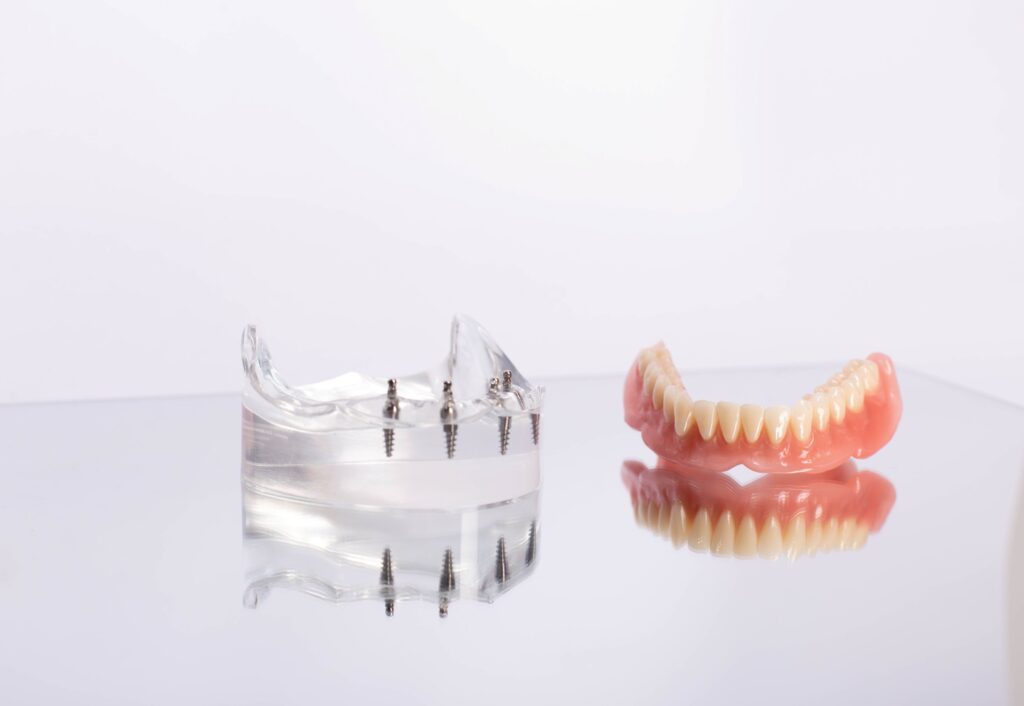
The latter procedure often requires a specialist to perform, so your dentist might refer you to an outside provider to enhance the likelihood of success. They will make a small incision in your gums to place anywhere from four to eight support poles that will eventually anchor a specially designed set of lifelike dentures.
Step #3: Osseointegration
It can take 3 to 6 months to recover from the implant procedure because that’s about how long it takes the jaw to generate enough new growth to fuse with the posts positioned there. This process, known as osseointegration, is what gives your new teeth their incredible strength and resilience.
Step #4: Placing Your Restoration
After you’ve healed sufficiently, your dentist can make impressions of your teeth and gums to send to a dental laboratory to design a one-of-a-kind set of dentures to anchor to your implants.
Once it’s all completed, you’ll have a beautiful new set of implant dentures that are unlikely to be damaged, destabilized, or dislodged and can last 20+ years if cared for properly!
Meet the Author
Dr. Ted Dunson has 25+ years of experience helping people of all ages build and maintain the healthiest, most beautiful versions of their smiles. He earned his dental doctorate at Baylor College of Dentistry, where he won the Award for Cosmetic Excellence. Today, he’s a member of the American Dental Association, and offers a comprehensive menu of services to meet your family’s unique needs. He partners with local experts for implant placement, then provides realistic restorations made from lifelike materials that can be customized to resemble your natural teeth and gums. You can request an appointment on the website or call (940) 566-4942.